29 Sep 2026
Learning from Every Heartbeat
AI for Fetal Heart Ultrasound
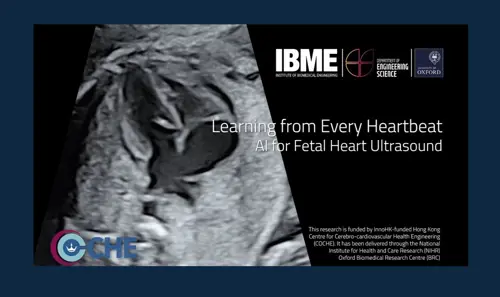
Every year, World Heart Day provides an annual opportunity to reflect on the importance of the research within our COCHE/CAIFE, a project situated in The Noble Group and co-led by Technikos Professor of Biomedical Engineering, Alison Noble and Professor of Fetal Medicine, Nuffield Department of Women’s and Reproductive Health, Aris Papageorghiou.
The project aims to use AI-driven solutions to improve the ability and accuracy of the early detection of congenital heart disease (CHD). This year, the two align more than ever as the World Heart Federation declared ‘2026 the Year of Neglected Cardiac Diseases', which CHD falls into. The World Heart Federation flagship report spotlights CHD and amongst other things, highlights the global inequities and scale of social and economic burden that the disease holds, as one of the most common birth defects globally. Indeed, direct economic impacts to institutions and individual patients are varied across countries, but vast regardless. For instance, in the United States, the lifetime costs of a CHD patient amount to $2.1 million and families pay approximately $190,000 out of pocket. Alternatively, in India, due to the high costs, families are often forced to sell assets or take out loans just to help fund care.
The research conducted within COCHE/CAIFE, aims to use ultrasound to improve prenatal detection of CHDs. In turn, this may result in better perinatal management of these pregnancies and hence, lead to better health outcomes and reduced developmental complications. Whilst the primary intention is to improve health outcomes, an indirect consequence of the latter might also be reducing the economic burden of this disease that impacts so many. For more information about the COCHE/CAIFE project, please see this video.


