Intensive Care Settings
Intensive Care Settings
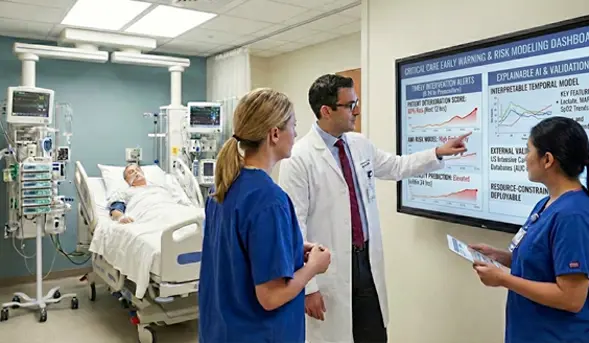
Diagnosis and Risk Modelling: In critical care, the difference between timely intervention and missed opportunity can be measured in hours. Our research develops AI systems that provide clinicians with early warning of patient deterioration, predicting mortality 6 to 24 hours before clinical events occur. We also perform predication tasks such as discharge, phenotypes, length of stay and readmission. By combining interpretable temporal models with rigorous external validation across US intensive care databases, we bridge the gap between algorithmic sophistication and bedside utility. Our work on acute myocardial infarction patients demonstrates that careful feature engineering and explainable architectures can match or exceed deep learning approaches while remaining deployable in resource-constrained settings.

Treatment Recommendation and Personalisation: Moving beyond diagnosis and risk prediction, our work in AI-driven treatment recommendation aims to personalise therapeutic pathways for individual patients. Standard treatment guidelines, while essential, often rely on population averages and may not account for the unique profile, comorbidities, or predicted response of a specific patient. We develop sequential decision-making models that analyse a patient's historical treatment responses and clinical trajectory to suggest optimal interventions at key decision points. Two main focuses: (1) Optimising Drug Regimens - dosage of medications is a dynamic challenge, and our models use reinforcement learning to explore the long-term impact of different treatment strategies, helping clinicians select regimens that maximise efficacy while minimising side effects and risk of resistance. (2) Personalised Intervention Timing - For critical care management, knowing when to escalate or de-escalate treatment is as vital as knowing what treatment to give. By continuously monitoring patient data, our models generate dynamic recommendations on the optimal timing of interventions, such as adjusting ventilator settings in the ICU. Ultimately, these data-driven insights help refine and personalise treatment decisions, leading to improved patient outcomes and more efficient use of healthcare resources.
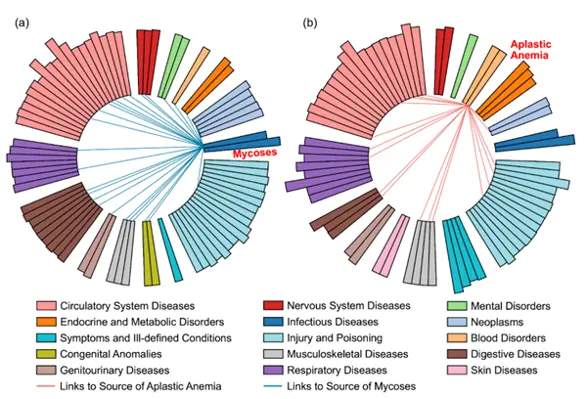
Rare Diseases: Rare conditions in the ICU are characterised by low prevalence, such as those occurring in fewer than 1 in 2,000 patients. These include recognised rare diseases (e.g. mycoses and aplastic anaemia), as well as low-prevalence ICU-specific conditions (e.g. the effects of therapeutic hypothermia). Patients with such conditions often experience limited access to specialised clinical expertise and diagnostic delays, resulting in prolonged ICU stays, higher readmission rates, and increased post-discharge mortality. We address this data-scarce setting by applying deep learning methods that leverage transferable knowledge from more common ICU conditions to support clinical decision-making for these vulnerable patient groups.