Low- and Middle-Income Countries with Wearables
Low- and Middle-Income Countries with Wearables
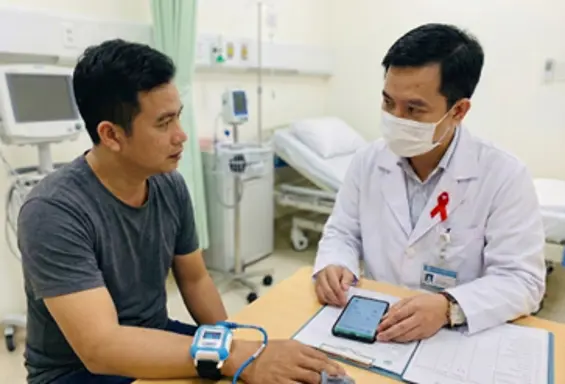
People living with HIV face dramatically elevated cardiovascular risk, yet the clinics serving them often lack the specialist equipment and expertise needed for screening. Worse still, the standard risk scores used worldwide were developed in wealthy countries for different populations, and they consistently fail when applied to HIV populations in resource-limited settings. Our AI screening tools use low-cost off-the-shelf wearable devices to detect cardiovascular disease in outpatient HIV clinics. No expensive imaging. No blood draws. No specialist interpretation required. Our work in Vietnam shows this is possible. By extracting rich physiological information from simple pulse oximeter waveforms, we can identify patients with cardiac abnormalities far more accurately than traditional risk scores, using equipment that costs a fraction of standard diagnostics and workflows that fit seamlessly into routine clinic visits. The patterns our AI learns make biological sense as patients are found to cluster according to their medications, metabolic profiles, and clinical trajectories. This interpretability builds the trust needed for real-world adoption.