People at the Quantum Device Lab, Department of Engineering Science, University of Oxford

People
Principal Investigator
Project Manager
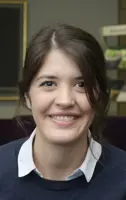
Maria Fuentes Perez
I am the project manager for Natalia Ares's team. With a background in physics, I completed my PhD at the CNB (Spain), focusing on the interface of physics and biology. Afterward, I joined Imperial College London (UK) as a postdoc before moving into the private biotech sector, where I worked as both an operations and project manager. Currently, I manage the portfolio of projects for Natalia and her team.
Post-docs

Frederico Martins
Postdoctoral Researcher
I am a solid-state physicist specialising in spin based quantum computing. In parallel with my activities in Natalia Ares’ team, I lead the Spin Qubit team at QuantrolOx, a University of Oxford spinout developing machine-learning-based software for the automated tuning and control of quantum processors. My research focuses on the development, control, and scaling of spin qubits in semiconductor nanostructures to enable robust and scalable quantum computing platforms.
Martyna Sienkiewicz
Postdoctoral Researcher
I completed an MSci in Physics, an MRes in Quantum Technologies, and a PhD in Quantum Engineering at University College London. During my PhD, I focused on the design, fabrication, and characterisation of low-dimensional and quantum dot devices for spin qubit applications. I am now in Dr Natalia Ares’ group, researching noise mechanisms relevant to quantum-dot spin qubits and developing noise mitigation strategies using machine learning approaches.

Liam Taghavian
Postdoctoral Researcher
I have a PhD in Electrical Engineering from the Royal Institute of Technology (KTH), Stockholm. My current research focuses on developing simulation methods for superconducting quantum circuits using machine learning and applied mathematics. My previous research interests include control theory, machine learning, optimization, and fractional calculus.

Mikhail Vaganov
Postdoctoral Researcher
I used to work with magnetic elastomers; that is, materials made of polymeric matrix filled with magnetic particles. Magnetic elastomers readily react to the application of a magnetic field and can be used in the development of field-controlled devices. My DPhil was mostly devoted to using electron and nuclear magnetic resonances for developing new methods for quantum information processing. Currently, I am part of a project in which we study thermodynamics of carbon nanotubes. My broader research interests lie in three major branches of quantum computation: the assembly of microwave apparatuses for quantum measurements, the development of quantum error correction protocols, and the addressability and control of qubits using an external electric field. I also teach physics at New College.
Pranav Vaidhyanathan
Postdoctoral Researcher
Theory of open quantum systems, specifically interested in investigating continuous measurements and feedback control in non-Markovian systems.

Yikai Yang
Postdoctoral Researcher
I conduct experimental research in quantum thermodynamics using quantum devices such as suspended carbon nanotubes and semiconductor quantum dots. My previous work spans spintronics, unconventional superconductivity, and quantum criticality, and my PhD research focused on exploiting cavity–magnon–polariton interactions to probe hybridized spin states in a model Ising compound.
DPhil Students

Jose Nicolas Alvez
DPhil Student
I graduated in physics from the University of Buenos Aires, where I completed a thesis on shortcuts to adiabaticity. My primary research interests lie in thermodynamics at the nano- and quantum scales, particularly at the interplay between information and energy and the fundamental aspects of quantum physics.
Cornelius Carlsson
DPhil Student
I completed an integrated MEng in Materials Science at Imperial College London, followed by an MSc in Applied Physics at the Technical University of Delft. During my MSc thesis, I focused on probing charge noise using quantum device crossbars. After an internship at IBM, where I worked on designing reflectometry circuits, I am now at Oxford researching autonomous tuning methods for scalable spin-qubit architectures.

Sonali Goel
DPhil Student
I completed my MEng in Engineering Science at the University of Oxford in 2024 and am currently pursuing a PhD applying machine learning to quantum technologies. My research focuses on AI for quantum and I explore this from multiple complementary directions. Currently, I am developing simulators and learning algorithms for device inference, designing physics-informed networks for predicting quantum dynamics, and improving LLM agents for scientific tasks.

Anuprita Kulkarni
DPhil Student
I graduated with a BS-MS dual-degree from the Indian Institute of Science Education and Research (IISER Bhopal), where I majored in physics, with a minor in electrical engineering and computer science. For my master's thesis, I explored the application of boson sampling towards analog quantum simulation. As a DPhil student, my research currently focuses on autonomous tuning and optimal control of spin-qubits in semiconductor quantum devices.

Jingrui Ma
DPhil Student
I graduated with a BEng in microelectronics joint program with University of Glasgow and MSc in physics from University of Science & Technology of China. My previous research includes mixed reality for robotics, superconducting microwave resonators, and traps in Ge/SiGe quantum wells. As a DPhil student in the group, I am exploring how machine learning could be used to optimise operation and to understand noise mechanisms of semiconductor quantum dots.

Isaac Marchant
DPhil Student
I hold an MSci & BA in Natural Sciences from the University of Cambridge, specialised in physics. Previously, I researched quantum sensing using superfluid gyroscopes and quantum thermodynamics/information using NV centres. Now, I am interested by quantum thermal machines on QD CNT & silicon architectures: for use in quantum technologies and as testbeds for fundamental physics.
Marek Rychetský
DPhil Student
Marek is a DPhil student in the group, working on machine learning for tuning quantum dots.
Lucas Schorling
DPhil Student
Lucas graduated with a BSc in Engineering Science from the Technical University of Munich and an MSc in Applied Mathematics from the University of Oxford. Current research focuses on developing machine learning algorithms to tune and control quantum devices, ranging from meta-learning to Bayesian optimization.

Freya Shah
DPhil Student
My research focuses on quantum-enhanced machine learning for quantum applications, particularly in quantum chemistry and materials science. More broadly, I am interested in developing ML frameworks to optimize and control quantum devices and to advance quantum simulation methods.

Samuel Taubenberger
DPhil Student
Samuel graduated with an MSc in Electrical Engineering, specializing in Quantum Engineering, from the Technical University of Munich. His previous research focused on quantum error correction, erasure-qubit implementations, and transformer-based autonomous tuning of superconducting qubits, particularly fluxonium qubits. At the University of Oxford, his current research focuses on autonomous tuning and quantum error correction for large-scale superconducting and semiconductor spin-qubit processors.

Dharun Venkateswaran
DPhil Student
I obtained a Theoretical Physics BSc from Lancaster University and subsequently completed the QFFF MSc at Imperial College London. Following an internship at Keysight Technologies where I worked on quantum error mitigation for superconducting qubits, my MSc thesis focused on quantum error correction, specifically the Toric code. My DPhil research is broadly interested in controlling errors for quantum computers.
Vivek Wadhia
DPhil Student
My research focuses on noise characterisation and mitigation in superconducting and semiconducting qubits. I am particularly interested in the interplay between noise/errors, thermal effects and qubit benchmarking.

George Whittle
DPhil Student
I have a background in Information Engineering and Machine Learning, and am carrying out research in novel algorithms bridging the gap between the fields of Amortized Bayesian Inference and Bayesian Filtering, with the ultimate goal of applying these to tracking unobservable dynamic phenomena in quantum devices. I also research Fundamental Neural Network Theory, where I apply Bayesian perspectives to understanding extrapolation and implicit priors in deep learning models.

Muna Said
DPhil Student
Optimization of spin qubit quantum computing using machine learning.
Alumni
Dr. Jonas Schuff -PhD Student (2021-2024) Current position: Research Scientist at Intel, Hillsboro, Oregon
Dr. Vincent Michal - Postdoctoral Researcher (2023-2024) Current position: Assistant Professor at the Niels Bohr Institute, Copenhagen
Dr. Barnaby Van Straaten - PhD Student (2020-2024) Current position: Postdoctoral Researcher at TU Delft
Dr. Brandon Severin - PhD Student (2020-2024) Current position: CEO/Co-Founder at Conductor Quantum
Dr. Kushagra Aggarwal - PhD Student (2020-2023) Current position: Postdoctoral Researcher at Cornell University
Dr. Sebastian Orbell - PhD Student (2020-2024) Current position: Research Scientist at Quantum Motion
Dr. David Craig - PhD Student (2020-2024) Current position: Research Scientist at QuantrolOx
Dr. Florian Vigneau - Postdoctoral Researcher (2019-2021) Current position: Senior Quantum Hardware Engineer at IQM
Dr. Anna Pearson - PhD Student (2016-2020) Current position: Lead Manager R&D (Research Scientist) at Quantinuum
Dr. Dominic Lennon - PhD Student (2017-2021) Current position: Cofounder and Direct of Product at Quantrol Ox
Dr. Hyungil Moon - Postdoctoral Researcher (2017-2021) Current position: Quantitative Strategist at Deutsche Bank
Dr. Vu Nguyen - Postdoctoral Researcher (2019-2020) Current position: Senior Machine Learning Scientist at Amazon Australia