Lubbock Lecture 2026: Speed, Sustainability and the Future of Transport
Location
Life and Mind Building, Parks Road, Oxford
Contact
events@eng.ox.ac.ukDate & Time
Thursday 07 May 2026 17:00 - Thursday 07 May 2026 20:00
Availability
Speed, Sustainability and the Future of Transport
From championship-winning Formula 1 cars to cleaner city buses and the next generation of electric racing engineers, this year’s Lubbock Lecture explores how engineering is transforming the way we move.
Dr John Owen, Chief Designer at Mercedes and a central figure in one of the most successful eras in Formula 1 history, takes us inside the high-stakes world of F1 car design. In a sport where victory can hinge on the smallest detail, he reveals what separates a great car from a flawed one, and how innovation, risk and resilience shape success at 200 miles per hour.
Professor Felix Leach, Associate Professor of Engineering Science and Rolls-Royce Fellow, turns to the urgent challenge of transport sustainability. As electrification reshapes our streets, he examines the real impacts on air quality and noise, the hidden environmental costs of larger vehicles, and how data can guide smarter policy and technology decisions for a cleaner future.
Dr Ryan Walker brings the focus to Oxford’s own student racing team, where undergraduates design, build and race an electric single-seater in just twelve months. His talk highlights how hands-on engineering experience is preparing the next generation of innovators for careers at the forefront of global motorsport and advanced automotive design.
Together, these talks offer a rare opportunity to see how cutting-edge engineering connects elite sport, public policy and everyday life, and to consider where the future of transport may take us next.
Formula 1 Car Design - The good, the bad and the ugly
Dr John Owen
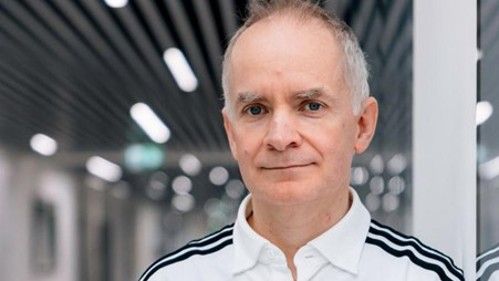
Formula 1 is a multi-billion dollar sport that is watched across the globe. It is a sport where the best drivers and the best teams compete across 25 races and 5 continents. To win you must have a great driver, a great team but above all else a great car. The creation of any Formula 1 car is always a perilous journey that demands the height of technical innovation, dogged determination and an uncompromising search for performance. The margins between success and failure are small and what has the foundation of a championship winning car can quickly be undone by seemingly the smallest of details. What does it take to make a good Formula 1 car, how easily can it become a bad one and how do you manage when things turn really ugly?
Speaker bio
After completing an Aeronautical Engineering degree and Aerodynamics PhD at Imperial College, in 2001 John moved into the world of Motorsport. He started his career in motorsport in Brackley in 2001, working as an aerodynamicist for chassis manufacturer Reynard Motorsport. A year later he moved to Hinwil, Switzerland, to work for the Sauber Petronas F1 team. In 2004 he was promoted to Senior Aerodynamicist for the Swiss outfit. In this role he led the aerodynamic development of their new cars and continued in Hinwil as the team transformed into the works BMW team in 2006.
At the end of 2007 John returned to Brackley as Principal Aerodynamicist for Honda Racing. When Honda exited the sport at the end of 2008, he led the aerodynamic development for what would become the Brawn GP BGP001, which won both the Drivers’ and Constructors’ Championships in 2009. In 2010 John was promoted to Chief Designer for the Mercedes works team. In this position he led the Design team at Mercedes to seven Drivers’ Championships and eight Constructors’ Championships. During his time at Brawn and Mercedes he was central to many original concepts including double diffusers, FRIC suspension systems (Front Rear Inter Connect), Double DRS (Drag Reduction System) and DAS (Dual-Axis Steering).
After 25 years of non-stop motorsport innovation, John has decided to take a break from Formula at the end of the year.
Transport Sustainability: Where are we going and how do we get there?
 Professor Felix Leach, Associate Professor of Engineering Science Rolls-Royce Fellow and Tutor in Engineering Science, Keble College
In the last decade the transport sector has undergone profound changes as electrification has become more mainstream. This lecture will look at the transitions that have and are occurring and the consequences of these. Electrification is known to bring local air quality benefits, and these can now be seen and measured, but the noise pollution improvements are less familiar. A recent project, collaborating with Oxfordshire County Council and numerous other stakeholders, has seen the replacement of all the diesel local buses in Oxford with electric equivalents. The air pollution improvements have been stark, but the impact on noise is even bigger: equivalent to tripling a local resident’s distance from the road. Thinking about new transportation technologies in a wholistic way is essential if we are to optimise their benefits, and recent work looking at data-driven life cycle analysis will be presented. This enables a detailed understanding of the impacts of these new technologies without having to rely on conjecture. Finally, one recent trend that is clear is the growing size of our cars – autobesity. The impacts of this are profound and these will be discussed alongside a policy suggestion for what might be done about it.
Oxford University Racing – Training the next generation of automotive engineers
 Dr Ryan Walker, Departmental Lecturer, Research Fellow and Tutor at Keble College
Oxford University first entered the popular Formula Student competition in 2022, where students design, build test and race a single-seater racing car against other universities from around the world. Over the last four years, the team has grown to include over 100 undergraduates from across the collegiate university, and graduates from the team have gone on to work for top racing teams. This talk by Dr. Walker will outline the highs and lows experienced by students building an electric racing car in just 12 months, their journey to date and what the future might hold.
Programme
17:00 Registration
17:25 – Welcome – Prof. Richard Willden, Deputy Head of the Department of Engineering Science
17:30 – Oxford University Racing - Training the next generation of automotive engineers.
17:50 – Transport Sustainability: Where are we going and how do we get there?
18:15 – Break
18:30 – Welcome – Prof. Clive Siviour, Head of the Department of Engineering Science
18:35 – Formula 1 Car Design - The good, the bad and the ugly
19:30 – Refreshments
20:00 – Close
Please register here


