
How can Building Energy Simulation Tools Help us Understand and Prepare Buildings for a Changing Climate? Third year DPhil student Laurence Peinturier recently presented her research at the ASHRAE Conference 2026 in Las Vegas
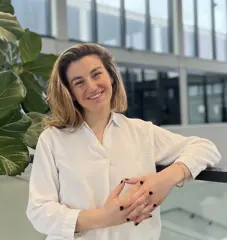
Now in the third year of her DPhil at the University of Oxford, Laurence Peinturier has been busy exploring how building energy simulation tools can help us understand and prepare buildings for a changing climate. Over the past year, she has focused particularly on how these tools can support adaptation to future weather conditions. While decarbonisation of the built environment is essential to limit global warming, we are already experiencing the effects of a warmer climate. Many of our buildings were designed to cope with cold winters, yet they are increasingly at risk of overheating in summer. This raises an important question: how will retrofitted buildings perform in 50- or 100-years’ time, under much hotter conditions?
Laurence recently presented this work at the ASHRAE Winter Conference 2026 in Las Vegas in February. Using case study buildings from the University of Oxford (incl. the Mathematical Institute, the Department of Pharmacology, and Holywell House), she explored how buildings of different ages and uses might perform under future climate (2030 to 2070). She also modelled net-zero retrofit versions of these buildings to test how well current decarbonisation strategies might hold up in the future. The findings highlighted an important retrofit paradox: although net-zero retrofits reduce energy use as anticipated, they tend to increase summer overheating. They also showed that vulnerability is shaped more by building type than by age alone, with older buildings sometimes out-performing more modern ones. Retrofitting for net zero must therefore go hand in hand with designing for future resilience.
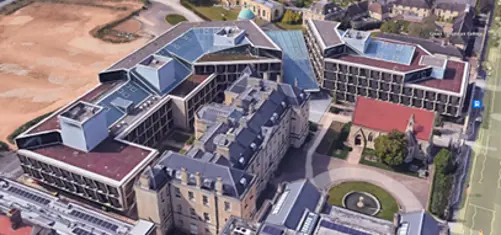

This then led Laurence to investigate how a newer, high-performance building might fare in the future. She focused on Oxford’s newly built Schwarzman Centre for the Humanities, the largest Passivhaus-certified building in Europe, to explore whether a building designed for ultra-low energy use can remain comfortable and efficient in a much warmer climate. While Passivhaus has been highly successful in reducing heating demand, less attention has traditionally been given to future summer conditions and cooling demand. By creating an energy model of the building and testing it under a range of future climate scenarios, she found that Passivhaus appears to offer partial resilience, but that cooling systems may become vulnerable in the longer term. The work also showed the importance of considering climate variability, rather than relying on a single future scenario. Laurence had the opportunity to present this research last month at the International Conference on Improving Energy Efficiency in Commercial Buildings and Smart Communities (IEECB&SC’26) in Frankfurt.


She says, "Looking ahead to the final year of my DPhil, I want to build on this work by exploring the relationship between buildings, future weather, and the grid. In particular, I am interested in how building energy simulation tools can help us better understand building-to-grid interactions, and support a transition to net zero that is not only efficient, but also resilient and well-integrated."
Reproduced by kind permission of the Oxford e-Research Centre