04 Aug 2026
AI reveals the hidden physics of a breaking droplet
Researchers have developed an AI system that determines key liquid properties from a single image of a droplet just before it breaks apart

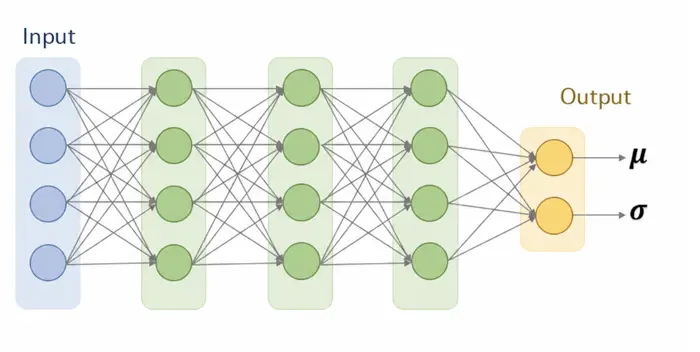
The machine learning (ML) technique developed in this study works in both directions. It can predict the shape of a dripping drop at pinch-off from the fluid properties, or infer the fluid properties from a single image of the drop captured near the point of breakup.
Prof Alfonso Castrejón-Pita along with collaborators from University College London, and University of Illinois Urbana-Champaign have developed an artificial intelligence (AI) system that can determine the physical properties of a liquid from a single image of a droplet just before it breaks apart. The new approach could provide a faster and simpler way to analyse liquids used in industries ranging from pharmaceuticals and chemical manufacturing to food production and inkjet printing.
Whether producing medicines, designing industrial coatings or ensuring the quality of food products, accurately measuring properties such as viscosity and surface tension is essential. These properties influence how liquids flow, spread and form droplets. However, existing techniques often require specialised laboratory equipment, trained operators and relatively large sample volumes. The team's new method offers a more accessible alternative by extracting the same information from a single photograph of a droplet at the precise moment it pinches off.
To develop the system, the researchers carried out hundreds of experiments using a diverse range of liquids, including water, alcohols, glycerol mixtures and silicone oils. High-speed cameras captured droplets as they formed and detached from nozzles under different conditions. The images were then processed to isolate the droplet outlines before being used to train machine-learning models capable of recognising subtle patterns invisible to the human eye.
The ML algorithm successfully predicted both viscosity and surface tension with high accuracy across liquids spanning more than three orders of magnitude in viscosity. The researchers also demonstrated that the process works in reverse, with the models accurately predicting the shape of a droplet from known liquid properties and experimental conditions.
Beyond measuring liquid properties, the research uncovered something unexpected. Without being told anything about the liquids themselves, the AI automatically grouped droplets with similar behaviours, revealing distinct patterns that correspond to different flow regimes. The findings suggest that although the final stages of droplet breakup follow well-established physical laws, the overall shape of a droplet retains a detailed record of the liquid's properties and the path it took before breaking. By recognising these hidden signatures, AI can uncover physical information that conventional analysis overlooks.
Prof Alfonso Castrejón-Pita, said:
‘These promising results suggest the potential for developing a 'one-drop rheometer and tensiometer – we were truly delighted by how well it works!'. Research such as this demonstrates the importance of a multidisciplinary and multiinstitutional approach and reinforces the idea that machine learning techniques are here to stay. Their applications in fluid dynamics have the potential to be transformative.’
The researchers believe the technique could pave the way for rapid, low-cost and automated liquid characterisation. In the future, it could support real-time quality control in manufacturing, automated industrial monitoring and robotic laboratories, reducing the need for multiple specialised instruments. By combining high-speed imaging with artificial intelligence, the approach offers a promising new route to analysing liquids quickly, accurately and using only a single snapshot.
The study, "How AI Learns the Secrets of a Breaking Drop to Predict Liquid Properties," has been published in Physical Review X. The research was carried out by researchers from the University of Oxford, University College London and the University of Illinois Urbana-Champaign.
Read the full paper here: https://link.aps.org/doi/10.1103/v3p1-lmzl


