04 Sep 2026
Micro-bladder model offers clues to stopping recurrent UTIs
A lab-grown micro bladder may explain why urinary tract infections (UTIs) return so frequently, according to a study led by researchers at UCL, the University of Oxford and the University of Leicester

Microscopic 3D Microtissue Bladder Model
The study, published in Nature Communications, shows that phage therapy – the use of tiny viruses to kill bacteria without harming people – could help to reduce recurrent infections, which happen when the bacteria responsible for UTIs ‘hide’ in the tissue of the bladder.
UTIs are one of the world’s most common infections, with around 400 million cases each year. They can be painful and disruptive, and for many people the infection can return after taking a course of antibiotics.
The researchers sought to understand why this happens by engineering a novel human 3D micro-bladder model that includes flowing urine to mimic the environment found in the human bladder.
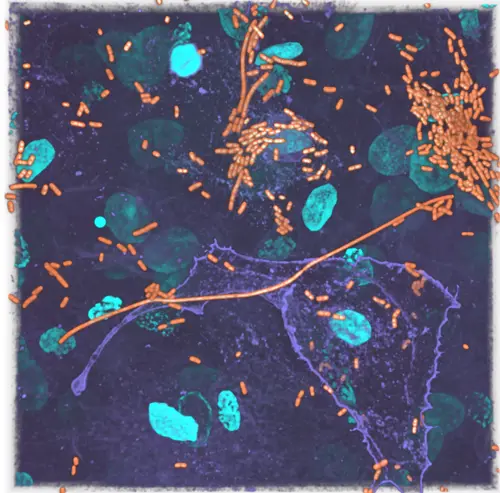
The study, conducted as part of the larger Beyond Antibiotics Programme Grant and funded by the Engineering and Physical Science Research Council (EPSRC), used this bladder model to test phage therapy on UTI bacteria. The team found that this therapy can wipe out bacteria hidden deep within the bladder wall, in what the researchers label ‘reservoirs’, which normal antibiotics can’t touch.
Senior author of the study, Professor Jennifer Rohn (UCL Division of Medicine), said: “Recurrent UTIs are incredibly frustrating for patients because the bacteria can survive antibiotics by retreating into protected reservoirs inside the bladder wall. Building a micro-bladder has allowed us to mimic real conditions in the urinary tract and see why antibiotics that look powerful in standard lab tests often fall short.”
The team focused on uropathogenic Escherichia coli (UPEC), a strain of E. coli adapted to infect the urinary tract and the cause of most UTIs. In hospitals, bacteria from a patient’s urine can be tested to see which antibiotics stop them growing, but these tests are usually done in a still, nutrient-rich liquid.
A real bladder behaves differently: urine is constantly moving and the bacteria are interacting with the bladder lining.
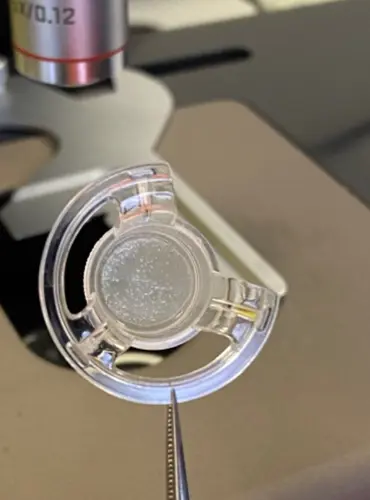
Realistic bladder models are hard to run with routine laboratory protocols as they can be highly complex. To solve this, Dr Ramon Garcia Maset (Institute of Biomedical Engineering) and colleagues at the University of Oxford developed a device that can work with typical cell cultures to recreate the flow conditions of urinary cycles.
When introducing UPEC to the micro-bladder, scientists found the bacteria became better at sticking to the bladder surface, and more likely to invade the bladder lining and set up protected reservoirs of bacteria hidden inside bladder cells where they are harder to reach.
The team then tested nitrofurantoin (a commonly used antibiotic for UTIs). In standard lab tests this treatment works well, but in the micro-bladder it struggled to fully clear the infection.
The researchers also tested a cocktail of phages, or viruses that infect and destroy bacteria. On its own, the phage cocktail also found it difficult to clear bacteria in a flowing environment. However, when the scientists combined phages with the antibiotic, the results improved, suggesting that a two-pronged approach could be more effective than either treatment alone.
One significant finding was that unlike the antibiotics, the phage treatment was able to reduce the number of protected bacterial reservoirs inside the bladder wall. Because these reservoirs can act like a breeding ground for future infection, reducing them could be an important step towards preventing UTIs from repeatedly returning.
Lead author Dr Garcia Maset said: “What’s particularly promising is that phage therapy was able to reach these hidden reservoirs of bacteria, rooting out the cause of the infection. We also discovered that urine flow substantially changes how bacteria behave and respond to treatment, suggesting that many conventional laboratory tests may be missing important aspects of the infection process.”
The study presented another potential benefit: phages appeared to boost the bladder tissue’s own early defence response. Researchers saw signs of increased immune signalling, including cytokines and chemokines (messenger proteins that help the body coordinate inflammation and bring immune cells to the site of infection).
Professor Martha Clokie, Director of the Becky Mayer Centre for Phage Research at the University of Leicester, said: “This study shows why it is so important to test phages under conditions that genuinely reflect the human body. By combining a realistic flowing micro-bladder model with phage and antibiotic treatment, we can begin to understand how best to use phages alongside existing medicines to achieve better outcomes for patients.”
Phage therapy is not yet a routine treatment for UTIs, and more research will be needed to confirm how well it works, how best to deliver it, and which patients are most likely to benefit. However, this study offers a promising route towards longer-lasting relief for people living with repeat UTIs.
The device design and image-analysis tools used in this study have been made freely available to encourage broader adoption across laboratories, with the hope they could find wider application in research focusing on the impact of flow-mediated mechanostimulation on biological systems.
This study was funded by the Engineering and Physical Science Research Council (EPSRC) Programme Grant 'Beyond Antibiotics' under the reference number EP/V026623/1.


